
Collection history
AOL Expressions: identity inside the interface
A documented interface shows how AOL presented personalization alongside its client, with categories and a visual picker for SuperBuddies.
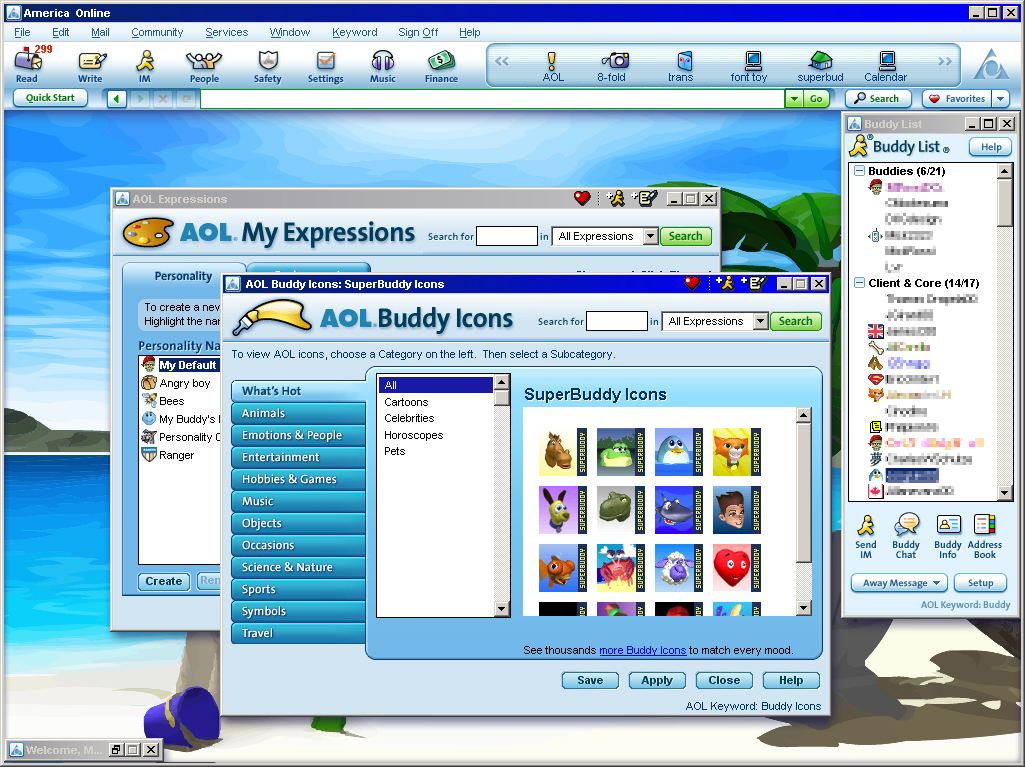
Choosing became part of the product
Mickey Rossi’s portfolio documents his work as art director across AOL’s core and client products. The pictured interface places a selection of SuperBuddies inside a named customization area. Categories, previews, and the neighboring Buddy List connect the choice of an image to the software in which it would appear.
Our interpretation of this screen is that personalization was being presented as an activity worth browsing in its own right. The interface invited a choice among visible alternatives instead of assuming that everyone would supply a personal photograph.
Running Man, buddy icon, and SuperBuddy
The AIM Running Man is a recognizable product symbol. A buddy icon is an image used with a person’s screen name. The SuperBuddy picker shown here is another named part of AOL’s customization interface. These terms should not be flattened into one file type or treated as interchangeable evidence of how every client worked.
A creator could borrow an interface character or visual style without the resulting file being an official AOL release. For an individual image, the source record matters more than a resemblance.
What this evidence leaves open
A portfolio screenshot establishes an interface and its visual organization. It does not, by itself, supply a complete release history, a download inventory, or the technical behavior of every choice. Compare it with client documentation before making claims about formats or installation.
The archive brings official promotional material and independently circulated graphics into the same collection while preserving their different source histories.