
Archive history
A short history of AIM buddy icons
How tiny profile images became a vivid form of identity, fandom, and visual culture on AOL Instant Messenger.
The buddy list becomes visual
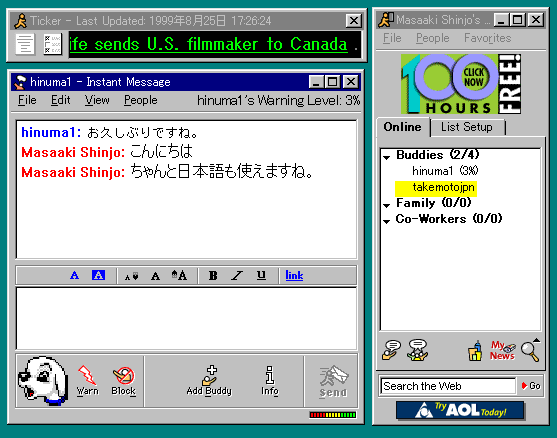
AOL Instant Messenger began in 1997 as a side project built by a small group of AOL engineers. Its buddy list made presence visible: friends, classmates, and strangers could be sorted into groups and seen arriving or going away in real time. A contemporary report on AIM 3.0 records the arrival of buddy-list icons on August 24, 1999.
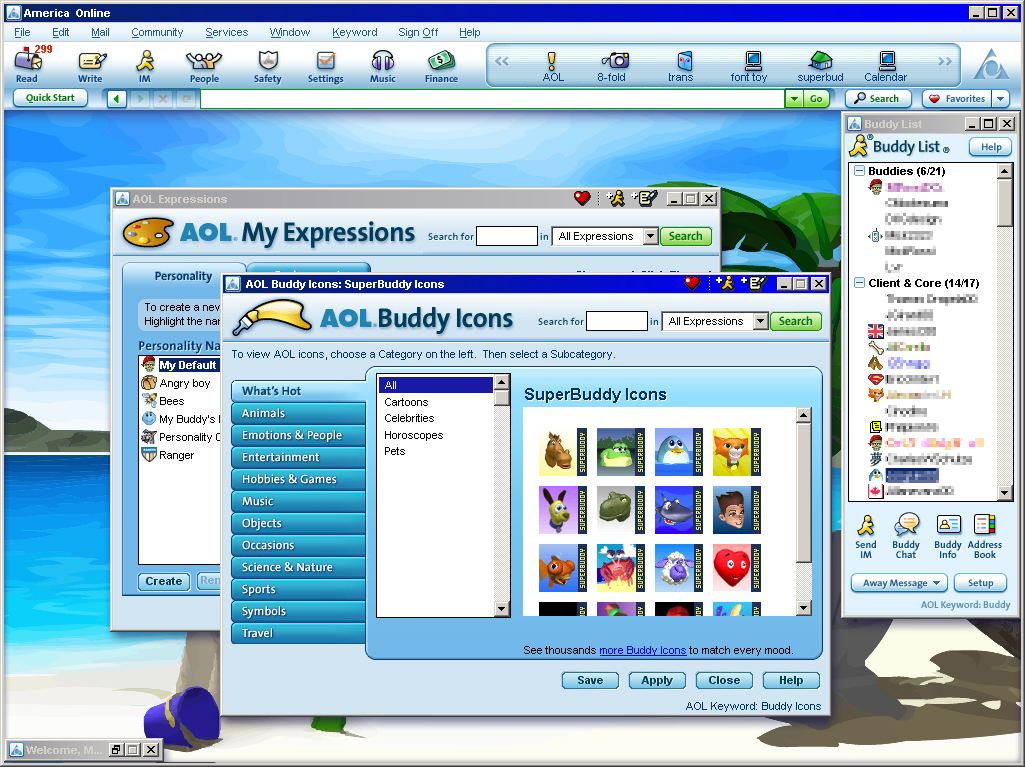
The icon attached a picture to a screen name. Other people saw it in the client, and changing it could be as casual as changing an away message. For the practical mechanics, see how buddy icons were chosen and displayed.
A picture barely 50 pixels wide
The canvas was so small that every decision became emphatic. Surviving client documentation describes images between 48×48 and 50×50 pixels. A face needed a close crop; text needed blunt contrast; an idea often had to survive in a single glance.
Animated GIFs turned that square into a tiny cinematic form. A 2003 essay about BadassBuddy noticed camera movement, cuts, lighting, and short narratives squeezed into the icon window. Some loops lasted only a few seconds. That was enough time for a reaction, a punch line, a declaration of love, or a cartoon character to suffer a compact but complete misfortune.
Directories, fan sites, and icon economies
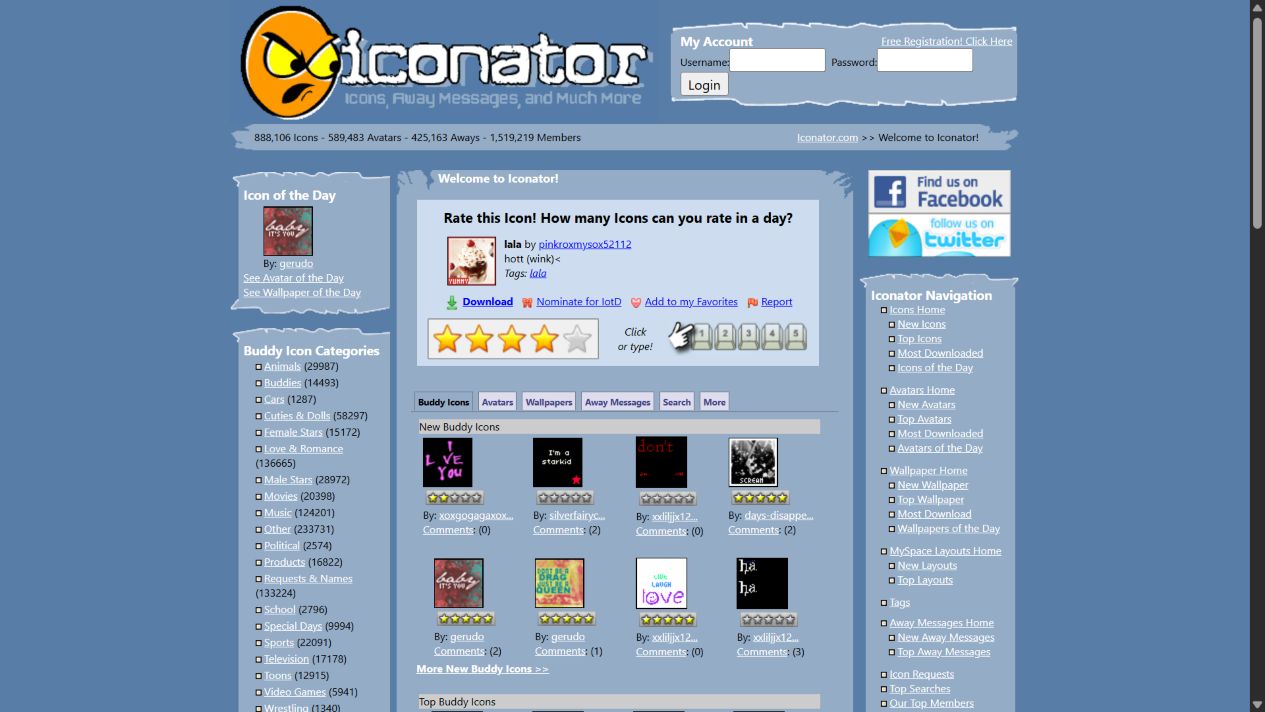
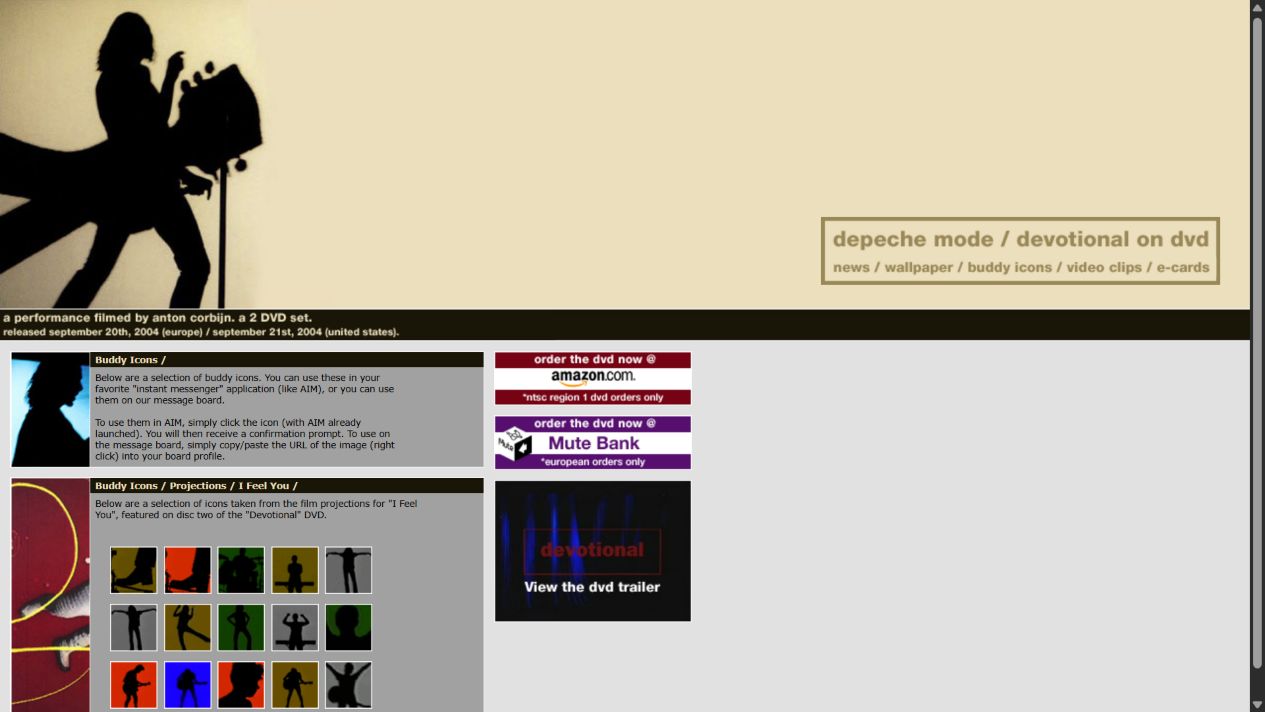
Icons moved through large directories such as Iconator and CoolBuddy, focused collections such as BadassBuddy, fan pages, message boards, official promotional sites, downloadable packs, and friends’ saved folders. Gallery categories helped people browse, while ratings, comments, contributor handles, and download instructions made the files part of a social economy.
Copying was normal. An icon might be renamed, recompressed, resized, or reposted without its first credit. A surviving directory can therefore show where a file circulated without proving where it began. The archive treats those sightings as provenance, not automatic authorship.
Fandom and identity
A buddy icon could announce a favorite band, film, television character, game, holiday, relationship, joke, mood, or subculture. It was both a profile picture and a status signal before either term settled into its present meaning. People borrowed mass-media images, made their own pixel art, and passed designs through communities that left little formal record.
The repetition matters. Hundreds of variations on a band logo or broken heart are not merely redundant; together they show the visual vocabulary people reached for when a screen name and a few pixels had to carry a personality.
What survived AIM
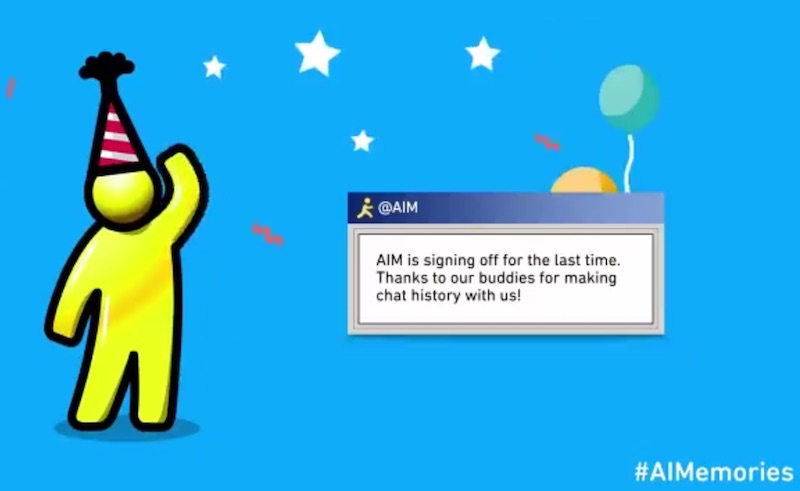
AIM closed on December 15, 2017. By then many of its icon sites had already vanished, but copied files remained in old directories, archived webpages, ZIP files, backups, and forgotten drives. What survives is uneven: sometimes an image keeps a filename and source page; sometimes it arrives with little more than its bytes.
That is why the archive keeps source observations, paths, dates, labels, and duplicate relationships beside the image. The file is the object. The traces around it explain how that object reached the present, even when its first maker is no longer recoverable.
The cultural record is broader than the files themselves. In his firsthand account of BuddyGopher and SubProfile, Nick Gray describes how AIM profiles and away messages became early experiments in social media and entrepreneurship.
Further reading
- How AIM began, told through interviews with its engineers
- Smithsonian Magazine on AIM’s social legacy
- The August 1999 report announcing AIM 3.0 and buddy-list icons
- AIM’s official farewell: One Last Away Message
- Preserved Adium help for AIM icon size and animation
- A 2003 reading of BadassBuddy icons as tiny cinema